I was an anxious patient for fifty years. Today, I am no longer one. Not because my anxiety has disappeared, but because this team took it seriously, without ever making a drama out of it.
Biological Dentistry in Weißenfels
The essentials in 30 seconds
Who treats you
Dr. med. dent. M.Sc. Sandro Strößner – working in implantology since 2013 · M.Sc. in Oral Implantology and Periodontology – together with the team at Zahnkompetenzzentrum Weißenfels.
First Appointment
Conversation, medical history and examination (3D X-ray if needed) – planning comes first, treatment follows. A purely informational conversation without an examination is free of charge; examination and treatment and cost plan are billed according to the GOZ (the German scale of dental fees).
Costs
Before every treatment, you receive a written treatment and cost plan showing your own contribution; patients with statutory and private health insurance are treated equally.
First Step
Book an appointment around the clock via our online reception (the “Appointment” button), or by phone during opening hours on 03443 339 65 54.
“Biological dentistry is the consistent attempt to treat the mouth as part of an interconnected organism.”
Understanding before we act.
Cone-beam CT scan, intraoral scans, structured assessment. The first appointment isn't treatment — it's a conversation backed by data.

Digitally planned, thought through backwards.
From the final dental prosthesis back to the surgery. What should exist at the end determines the first step — not the other way round.

Minimally invasive, navigated.
Coordinated by one team under one roof. Surgery, prosthetics, laboratory — nothing handed off, nothing lost in translation.

Our Focus Areas — Biological Dentistry & More.
On request, we carry out material compatibility tests, check for heavy metals (e.g. amalgam residues), and work together with GPs and alternative practitioners (Heilpraktiker) where your treatment is to be supported on an interdisciplinary basis.
Your questions — answered by us.
Short videos in which our team answers the questions we're asked most often. No jargon, no sales pressure.
The videos provide general information and do not replace individual advice or examination. The course and outcome of treatment depend on personal circumstances; medicine offers no guarantee of success. All videos have subtitles.
PHILOSOPHY
What biological dentistry means – a holistic view of the mouth
Biological dentistry – often also called holistic dentistry – is not a single treatment method or a particular product, but an attitude towards the whole person. At its centre is the idea that the mouth is not a self-contained area, but part of a connected organism. Teeth, gums, jaw, and mucosa are linked to the rest of the body via nerves, blood vessels, muscles, and the immune system. A biologically oriented practice therefore tries not to consider a dental question in isolation, but to view it in the context of a person's overall state of health.
This perspective is, first and foremost, a broadening of view, not an opposition to established dentistry. A biological practice treats decay, roots, gums, and missing teeth according to the same scientifically recognised principles as any other. What is added is particular attention to the materials used, to approaches that are as gentle and tissue-sparing as possible, and to the wish, shared by many people, to rely on materials in the mouth that they personally feel are tolerable and body-friendly. At the Zahnkompetenzzentrum Dr. med. dent. M.Sc. Sandro Strößner, we therefore understand biological dentistry as careful, material-conscious work tailored to the individual person.
Three guiding principles instead of promises of a cure
It matters to us to be honest from the outset: biological dentistry is not a path that promises to cure general illnesses across the board. Anyone claiming that replacing dental materials reliably removes symptoms elsewhere in the body is going beyond what can be responsibly substantiated. We deliberately choose cautious wording and describe what a biological approach can achieve, without raising expectations that cannot be met. Three guiding principles shape our work:
- Material awareness – we choose materials carefully and take into account any wish for metal-free, well-tolerated solutions wherever this makes medical sense.
- Preserving tooth structure – we try to preserve as much healthy tooth substance as possible and to proceed as gently as possible.
- Bringing it together – we look at the oral findings in the context of your general medical history, without claiming unproven cause-and-effect chains.
This approach means, above all, that we take our time – for the conversation, for the examination, and for explaining why we consider a particular material or method sensible in your situation. In Weißenfels and the surrounding region, many people want exactly this kind of calm, understandable support. The following sections explain the individual building blocks of biologically oriented treatment – objectively, clearly and without exaggerated promises.
MOUTH & BODY
The Connection Between Oral Health and General Health
A central idea in biological dentistry is that the mouth does not function separately from the rest of the body. This connection is not an esoteric claim, but is, in part, well researched: the oral cavity is, from the outset, the gateway for food and the air we breathe; it hosts a diverse microbiome and is closely connected to the rest of the body via mucous membranes and blood vessels. Inflammatory processes in the mouth are therefore not necessarily confined to the mouth, but can place a burden on the body as a whole.
What the science describes – and what remains open
The link is best documented for chronic gum and periodontal disease. Advanced periodontitis – that is, persistent inflammation of the periodontium – is linked in medical research to a number of general health conditions, for example to blood sugar control in diabetes or to strain on the cardiovascular system. It is important to interpret these findings correctly: these are observed associations and plausible biological mechanisms, not simple cause-and-effect relationships in which treating one condition reliably cures the other. We deliberately communicate this with restraint, because a healthy mouth can support general health without this amounting to any promise of a cure.
The microbiome – the community of microorganisms in the mouth – is also increasingly coming into focus. A balanced oral environment is considered desirable, while a persistent imbalance can encourage inflammation. From a biological point of view, it is therefore logical not only to repair acute damage, but also to keep an eye on the overall conditions in the mouth: healthy gums, a well-functioning saliva environment, and consistent yet gentle care.
What this means for our work
Because the mouth and the body are connected, our biological medical history asks about more than just the current dental findings. Existing general health conditions, medications taken regularly, known allergies or intolerances, and how you personally feel about your health all feed into our thinking. This helps us plan treatment that fits your overall situation, and allows us, where necessary, to liaise with your other treating doctors. Such an overview does not replace specialist diagnosis of other conditions, but complements dental treatment with a more attentive view of the whole person.
- Careful recording of your medical history, including general conditions, medication and known intolerances.
- Attention to inflammatory processes in the mouth, particularly in the tooth-supporting structures, since these can place a burden on the body.
- Taking the oral environment and care habits into account as part of a mouth that stays healthy long-term.
- Coordination with GPs or specialists where needed, for example before larger procedures or where underlying health conditions exist.
- Measured, factual communication: A healthy mouth supports overall wellbeing, without this turning into blanket promises of curing other conditions.
MATERIALS
Metal-free and biocompatible materials – the material question
The choice of materials is perhaps the most tangible feature of biological dentistry. Materials in the mouth are worn for years, often for decades; they are in constant contact with saliva, mucosa, bacteria, and chewing forces. It therefore makes sense to pay particular attention to these materials. “Biocompatible” means that a material is tolerated as well as possible by the body and does not trigger any unwanted reactions in the tissue. Many patients also explicitly want metal-free solutions – out of personal conviction, because of a known intolerance, or for aesthetic reasons.
Which materials are central to biological dentistry
At the centre is usually high-performance ceramic, above all zirconium dioxide, and, for visible restorations, various tooth-coloured glass and feldspar ceramics. These are metal-free, visually close to the natural tooth, and considered well tolerated by tissue. For fillings, tooth-coloured composites or ceramic materials are an option; for crowns, partial crowns, bridges, and veneers, all-ceramic solutions may be used depending on the situation. Even fixed dental prosthetics can, in many cases, do entirely without metal. An honest classification matters here: metal-free does not automatically mean “better for everyone”, but describes a particular material approach that makes sense in many, though not all, situations.
- All-ceramic material (e.g. zirconium dioxide, glass ceramic) for crowns, partial crowns, bridges and veneers – metal-free and tooth-coloured.
- Tooth-coloured composites and ceramic materials for fillings that visually mimic natural tooth enamel.
- Zirconium dioxide ceramic implants as a metal-free alternative artificial tooth root, where this is desired and the situation allows it.
- Designs using as little material as possible, relying on a small number of well-tolerated components.
What “well-tolerated” honestly means
The tolerability of a material does not depend on the material alone, but also on the individual person. True allergies to dental materials are rare overall, but do occur; far more common is the personal wish to avoid certain materials as a precaution. We take both seriously. At the same time, it is important to us not to give the impression that a well-established material is generally harmful. Titanium, for example, is still considered very well tolerated and has been tried and tested millions of times over. A biologically oriented practice offers a metal-free alternative where it is wanted and sensible – but it does not demonise established materials. This factual approach protects you from exaggerated expectations and from unnecessary treatment.
In the consultation, we lay out the possible materials openly side by side and explain their properties, advantages, disadvantages and respective limitations. This means you decide on the basis of comprehensible properties, not buzzwords. If you would like consistently metal-free treatment, please raise this with us specifically, so that we can select suitable materials and, for multi-part constructions, their connecting components accordingly.
TOLERABILITY
Material tolerance, medical history and an honest approach to testing
The subject of material tolerance is frequently raised, particularly in biological dentistry. Some people have a known allergy, others report intolerances in other areas of life, or simply wish to avoid certain substances as a precaution. We take these concerns seriously and discuss them thoroughly – while placing importance on a realistic assessment of what can actually be established and what cannot.
Medical history as the most important source
The first, and often most revealing, step is a detailed conversation about your medical history. Have you had reactions to jewellery, metals, plasters, or medication in the past? Do you have any medically diagnosed allergies? How have you tolerated existing restorations in your mouth? This information helps us to avoid certain materials from the outset and to make a selection you feel comfortable with. Where there is a well-founded suspicion of a genuine allergy, specialist allergy testing, for example with a dermatologist, is the medically recognised route – not every test offered on the internet carries the same diagnostic value.
What tests can do – and what they can't
Numerous methods are in circulation that promise a comprehensive “material compatibility test”. A sober view is called for here. Recognised allergy tests, such as the patch test, can identify certain contact allergies. Other, non-established testing methods, however, often do not produce reliably documented results, and we do not present them as confirmed diagnostics. Our approach is therefore a pragmatic one: we carefully record your medical history, take into account any existing specialist findings, and, where in doubt, choose materials that are considered well tolerated and that match your preferences. This means we avoid recommending costly examinations of questionable benefit to you.
- A thorough medical history covering known allergies, previous reactions, and how any earlier restorations have behaved.
- Taking into account any existing specialist findings, such as an allergy test already carried out.
- Where there is reasonable suspicion, referral to specialist allergy diagnostics rather than self-assessment.
- Choosing well-tolerated materials, metal-free on request, as a pragmatic approach where reliable testing isn't possible or wouldn't make sense.
- A clear distinction between recognised procedures and tests without a robust scientific basis.
This honest approach may sound less spectacular than the promise of a single test that answers every question. But it serves our patients' interests, because it avoids unnecessary costs and false reassurance. At the Zahnkompetenzzentrum in Weißenfels, we take the time to assess your personal situation and, together with you, choose a material with which you feel well looked after.
AMALGAM
Amalgam and legacy fillings – explained factually and treated gently
Hardly any topic comes up as often in holistic dentistry as amalgam. Amalgam is a silvery, shiny filling material that was used for decades to treat tooth decay, because it is durable and easy to work with. It contains an alloy of various metals, including mercury in bound form. In recent years, the use of amalgam has declined sharply, partly for environmental reasons; since 2025, the use of dental amalgam has generally no longer been permitted within the European Union. In practice today, the main question is therefore how to deal with existing, older amalgam fillings.
A sober assessment
Factual language is important here. Many existing amalgam fillings remain unremarkable for years and do not need to be removed simply because they are made of amalgam. Replacement can, however, be sensible or desired for various reasons: because a filling has started to leak, because new decay has developed underneath it, because there is a crack in the tooth – or because someone, out of personal conviction, wants a metal-free restoration. We explicitly respect this wish. At the same time, we avoid stirring up fears or linking a replacement to any blanket promise that this would make symptoms in other parts of the body disappear. Such a promise would not be professionally justifiable.
Why the method of removal matters
When an amalgam filling is removed, drilling releases very fine particles and vapours. To keep as much of this as possible from entering the mouth and the surrounding environment, we use particular protective measures during removal. The aim is to keep the exposure during the procedure as low as possible – for you, for the treatment team, and for the environment. In our view, such precautions are a natural part of careful, tissue-friendly work.
- Generous cooling and water supply, to reduce the heating of the material and therefore the release of vapours.
- High-power suction directly at the treatment area, to capture particles and aerosols in a targeted way.
- Isolating the tooth from the rest of the mouth, for example using a protective sheet (rubber dam), where this is possible and appropriate.
- As swift and tissue-sparing an approach as possible, to keep the strain brief.
- Proper disposal of the removed material through the designated channels and separators.
After removal, we restore the tooth with a tooth-coloured, metal-free material – depending on size and location, with a composite filling, a ceramic partial crown, or a crown. This means the replacement also results in an aesthetically unobtrusive restoration. Whether and when a replacement makes sense for you is something we discuss individually and without pressure. Sometimes waiting is the right recommendation; sometimes a specific dental finding speaks in favour of replacement. We make this decision together with you, based on the actual findings and your personal wishes.
RANGE OF TREATMENTS
The range of biological treatments and the gentle approach
A biologically oriented practice essentially offers the entire spectrum of modern dentistry – just with particular attention to material choice, preserving tooth substance, and prevention. It is not about doing something fundamentally different, but about implementing well-established methods with extra care. Gentle procedures here mean preserving as much healthy tooth substance as possible, treating the surrounding tissue carefully, and avoiding unnecessary intervention. Prevention deliberately comes first, because the gentlest procedure is the one that never becomes necessary.
Important building blocks of biologically oriented treatment
- Prevention and professional dental cleaning as a foundation, to catch conditions early and reduce how often larger procedures become necessary.
- Tissue-sparing filling therapy with tooth-coloured, metal-free materials instead of extensive removal.
- Treating gum and periodontal disease, since inflamed tissue in the mouth can place a burden on the whole body.
- Metal-free, all-ceramic dental restorations – crowns, partial crowns, bridges and veneers.
- Ceramic implants as a metal-free option for the artificial tooth root, where this is desired and medically suitable.
- Objective, protected replacement of existing amalgam fillings, on request or where dentally necessary.
- Preserving your own teeth wherever sensibly possible, instead of hasty extraction.
Gentle treatment – also for anxious people
For us, treatment that is gentle on both tissue and patient also means that you feel comfortable during your appointment. Many people feel tense or anxious before dental procedures. We respond to this, explain every step, and take our time. On request, and after careful assessment, treatment can be accompanied by a relaxed twilight sleep, known as sedation. This allows necessary treatment to take place more calmly and with less strain. We discuss in detail beforehand what is suitable in each individual case.
Which of these elements play a role in your situation emerges from the examination and from your own wishes. Biological treatment is therefore never a fixed programme, but a path put together individually. At the Zahnkompetenzzentrum Dr. med. dent. M.Sc. Sandro Strößner, we bring diagnostics, consultation, treatment and aftercare together at one location in Weißenfels, so that your treatment is supported from a single source throughout every phase.
ABLAUF
The holistic initial examination – step by step
A holistically minded initial examination differs from a brief routine appointment above all in the time we take and the breadth of the view we take. We want to understand what has brought you to us, what your mouth and teeth actually look like, and what part your general health plays in this. The following overview shows the typical process – the exact order and scope always depend on your personal situation and may vary.
- Detailed conversation: We start by listening – to your concern, your expectations, and your wish for a material-conscious or metal-free restoration.
- General and dental history: We record any general health conditions, medications, known allergies and intolerances, as well as your previous experiences with dental treatment.
- Thorough examination of the mouth: We assess the teeth, any existing fillings and restorations, the gums, and the condition of the periodontium.
- Assessment of the gums: We specifically check for inflammatory changes, as the condition of the periodontium is particularly relevant to overall health.
- Imaging as needed: Where medically justified, we use X-rays to assess hidden findings and the bone.
- Discussing materials: We assess the possible materials and address your wish for metal-free or especially well-tolerated solutions.
- Discussing the findings together: We explain what we've found in plain language and set out possible options, including watchful waiting where that makes sense.
- Treatment and cost plan: You receive a comprehensible, written plan setting out the proposed steps, the alternatives, and the expected costs.
Why we take our time
A careful initial examination is the basis for every further decision. It prevents treatment being carried out too hastily and creates the clarity needed about your situation. It often turns out that a cautious, preventive approach makes sense; sometimes a specific treatment need emerges. In both cases, it matters to us that you understand and support the recommendation. A holistic examination does not replace specialist medical assessment of underlying conditions, but responsibly places the findings in your mouth within this wider context.
Ideally, you leave your first appointment with a clear picture: what the current situation is, what options are available, which materials might be suitable, and what costs to expect. On this basis, you can decide, calmly and without time pressure, how to proceed.
COSTS & REGION
Costs, insurance cover and your route to us in Weißenfels
The cost of biologically oriented treatment cannot be stated as a flat rate, because it depends entirely on the particular situation: whether it involves a single filling, dental prosthetics, treatment of the gums, or replacing existing restorations, and which materials are chosen. High-quality, metal-free materials and their processing can be more involved than simple standard solutions. There is therefore no fixed price – but there is a written, comprehensible plan, which you will receive from us before treatment begins, setting out every item.
We are aware that the financial side plays an important role. That's why we discuss together which treatment makes medical sense while also being affordable for you, and explain the treatment and cost plan item by item. This way nothing remains unclear, and you have a solid basis for your decision.
Statutory health insurers cover recognised basic care – such as examinations, simple fillings under standard care, and the treatment of gum disease according to current guidelines. For dental prosthetics, a fixed subsidy based on the diagnosis applies, calculated against standard care, which can increase with a bonus booklet kept up to date without gaps. Higher-value, metal-free solutions, professional dental cleaning, or replacing intact fillings for personal reasons generally go beyond what statutory insurance covers and are then a private service. Privately insured patients and those with supplementary insurance are best advised to clarify the extent of their reimbursement with their insurer in advance. We are happy to prepare a treatment and cost plan for you that you can submit before treatment begins – simply get in touch with us on 03443 / 339 65 54.
Biological Dentistry in Weißenfels and the Surrounding Area
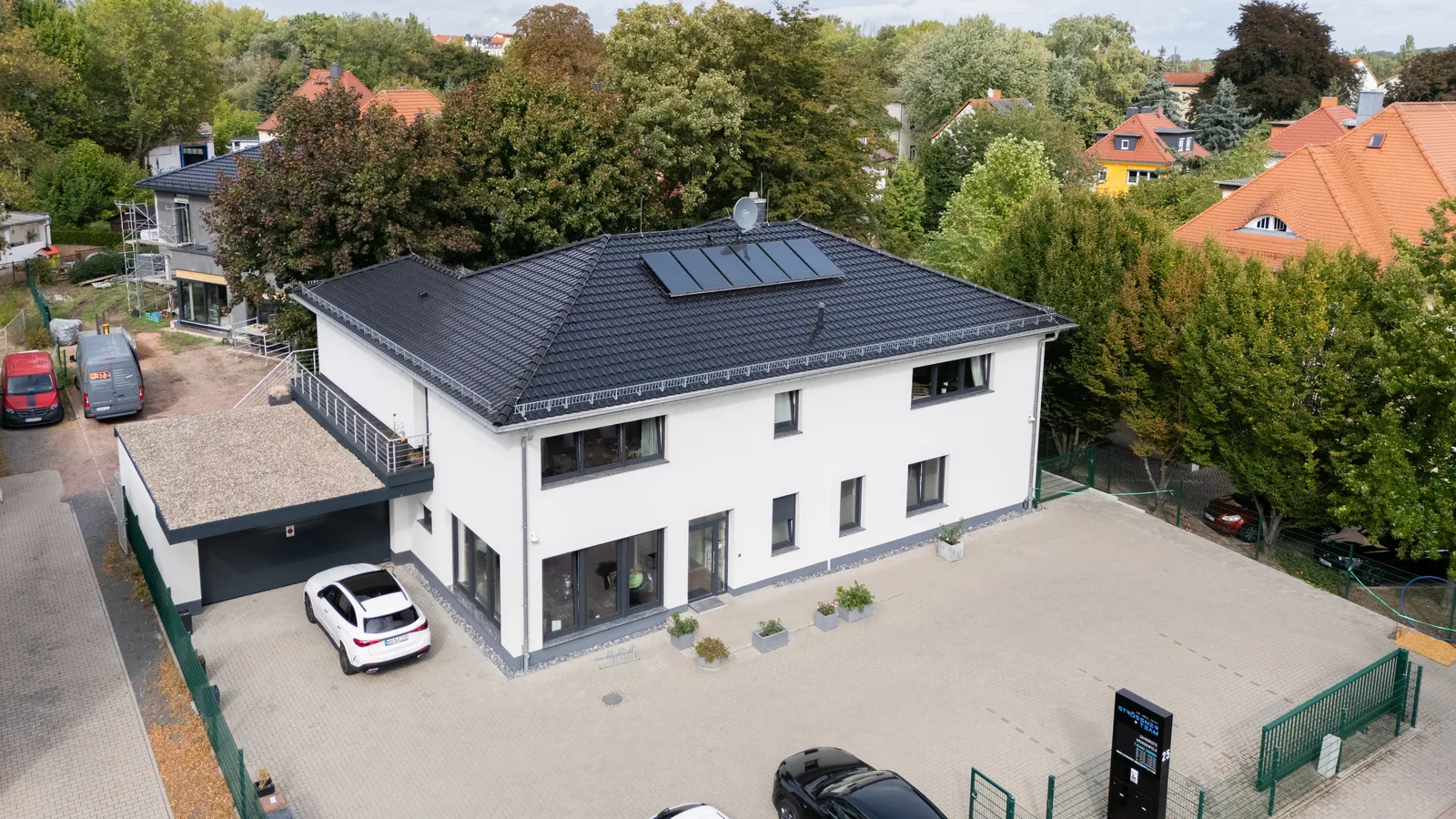
The Zahnkompetenzzentrum Dr. med. dent. M.Sc. Sandro Strößner is located at Leopold-Kell-Straße 25 in 06667 Weißenfels in the Burgenlandkreis (Saxony-Anhalt). Material-conscious, holistically minded dentistry of this kind is not offered by every practice, which is why people find their way to us not only from Weißenfels itself, but also from the wider Burgenlandkreis and the area between Halle, Leipzig, and Naumburg. Diagnostics, consultation, treatment, and aftercare all take place at a single location, so that treatment for patients travelling from further away is also coordinated in one place.
If you are considering biologically oriented, as far as possible metal-free treatment, or simply want a calm, honest assessment of your situation, a personal conversation is the best first step. We look at your situation, set out the options factually, and show you the possible paths – clearly and without time pressure. Please feel free to book an appointment by phone on 03443 339 65 54. We take the time your concerns deserve and support you on the way to healthy, well-tolerated treatment.
Thought through holistically, implemented biocompatibly
Biological dentistry is the consistent attempt to treat the mouth as part of an interconnected organism. That means materials we place in the mouth should support the whole body – not burden it. Procedures should be carried out as gently as possible and respect each patient's individual balance.
At our Zahnkompetenzzentrum, biological dentistry is not a marketing buzzword, but lived practice. We use ceramic implants instead of titanium, use all-ceramic restorations with no metal, work with the patient's own PRF blood concentrate, and advise on the interactions between oral and general health.
Voices that have stayed.
What convinced me was the absence of marketing. No promises. Just planning, explanation, execution. I had eight implants placed and didn't even feel like I'd made a difficult decision.
Questions, answered calmly.
At the Zahnkompetenzzentrum
Related Focus Areas & Further Treatments
Metal-Free & Holistic
Zirconia Ceramic
Ceramic Instead of Titanium
All Services at a Glance
Ceramic Implants, Amalgam Removal, PRF
No-Obligation Cost Calculator